CONJUNCTIVITIS IN CATS
What does “conjunctivitis” mean?
Any medical term that ends in “itis” means “inflammation of”. Conjunctivitis is defined as inflammation of
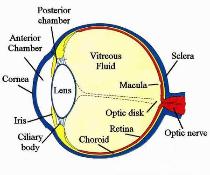
the conjunctiva. The conjunctiva is a mucous membrane, similar to the lining of the mouth and nose. It is
a layer of epithelial cells with mucus-secreting cells that covers the eyeball and lines the eyelids. The cat
has a third eyelid, or nictitating membrane, in the inner corner of the eye. This is also covered by
conjunctiva. In normal cats the conjunctiva of the eyelids is not readily visible and has a pale, pink color.
With conjunctivitis the conjunctival membranes become swollen and bulge from the lids, take on a deep
red color and the tears may become cloudy. Conjunctivitis can affect one (unilateral) or both (bilateral)
eyes.
How will I recognize conjunctivitis in my cat?
If you see excessive tearing from one or both eyes, cloudy, yellow or even greenish discharge, and
prominent and reddened conjunctival membranes, your cat may have conjunctivitis and should be seen
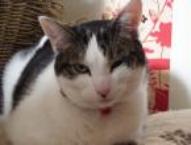
by a veterinarian. Your cat may be reluctant to face light (photophobia), close or squint its eyes or the
swelling of the conjunctiva may partially close the eye. The third eyelid may protrude and cover the
eyeball. The cat may rub its eye.
How is conjunctivitis diagnosed?
A simple diagnosis of conjunctivitis is made after the veterinarian rules out conditions such as a foreign
body in the eye, blocked tear ducts preventing normal drainage of tears or injury to the eye and cornea.
Because there are many causes of conjunctivitis that do not directly involve the eye, a specific
diagnosis may involve blood tests.
What are some of the causes of conjunctivitis?
Causes of conjunctivitis can be roughly divided into two categories: infections from bacteria, viruses or
other infectious organisms and non-infectious causes.
What are some of the non-infectious causes?
Breeds such as Persians and Himalayas and other long-haired breeds may be born with a turning in of
the eyelids called entropion. Entropion causes corneal irritation when the eyelashes constantly rub
against the eyeball. Foreign bodies such as dust or sand may become trapped inside the eyelids, or
exposure to irritant chemicals may initiate conjunctivitis that may become secondarily infected. Allergies
are believed to be a common cause of conjunctivitis because the allergens are difficult to pinpoint and
avoid.
What are some of the infectious causes of conjunctivitis?
Infectious agents (bacteria, viruses, etc.) are the most common causes of conjunctivitis in cats. In many
cases virus infections such as Feline Viral Rhinotracheitis (FVR), Feline Calicivirus (of which there are
many different strains) are the initial cause of inflammation. This allows a variety of bacteria such as
Streptococci and Staphylococci to move in and cause a secondary infection. Two special organisms,
Chlamydia and Mycoplasma (of which there are a number of types that infect cats) are capable on their
own of initiating conjunctivitis.
How can these causes of the conjunctivitis be differentially diagnosed?
Because most cases are bacterial infections causing much of the symptoms (virus infections tend to
improve without treatment) and because there is a need to reduce the immediate pain and
inflammation, treatment is usually begun without a specific diagnosis. In cases that are not improving or
where there is need to make a definitive diagnosis, swab samples may be taken from the eyes and
sent away for specialized laboratory culturing and microscopic examination. Blood samples may also
be useful.
What treatments are used?
The general approach is to use preparations containing antibiotics to control the bacteria and anti-
inflammatory drugs to reduce the inflammation and encourage healing. These preparations come as
either drops or ointment for instilling into the eyes. Local treatment may need to be supplemented with
injections and/or pills.
How should eye medication be administered?
Regular and frequent treatment is essential. Most ophthalmic drops need to be administered at least 4-
6 times a day. Ointments may require less frequent administration but may be more difficult to
administer. Two people may be necessary: one to hold the cat and the other to administer the ointment,
at least until the discomfort and sensitivity of the eyes has decreased. Apply 1/4 to 1/2 inch (0.6 to 1.25
cm)of ointment to each eye and then close the lids to smear the ointment across the eyeball. Liquid
preparations can be applied directly onto the surface of the eye; one or two drops per eye are usually
sufficient. If you have any doubts as to how to give your cat’s medication, please ask us to demonstrate
the proper procedure for you.
When should I expect a response?
Normally you will expect a rapid improvement after a few days. But even if the conjunctivitis has
resolved, do not stop treatment until the end of the prescribed period. Stopping your cat’s medication
early may allow a resurgence of the infection and make it harder to eliminate the next time.
Can the conjunctivitis recur?
With some non-infectious causes, if the underlying cause is not removed the conjunctivitis will recur.
Some of the viruses that cause infectious conjunctivitis may persist in a hidden form or as chronic
infections and flare up from time to time, especially during periods of stress or illness.
 |
 |
 |
 |
 |
 |
 |
 |
 |
 |
 |
 |

| Animal Hospital of Fate 1001 North W.E.Crawford (Highway 66 in Fate) Rockwall, Texas 75087 972-722-0066 |
1001 North W.E.Crawford (Highway 66 in Fate) Rockwall, Texas 75087 972-722-0066 |
| Darren L. Goucher, DVM Dusty B. Goucher, DVM The Staff of the Animal Hospital of Fate |