FELINE INFECTIOUS PERITONITIS
What is feline infectious peritonitis?
Feline infectious peritonitis (FIP) is an important disease of domestic cats and most other members
of the cat family (Felidae). It occurs worldwide in cats of all ages but the disease is most often seen
in cats up to 2 years of age. Although FIP is not a particularly common disease, it is important
because once a cat develops the disease, the outcome is almost invariably fatal.
What is the cause of FIP?
FIP is associated with infection with a virus called Feline Coronavirus. Other members of the
coronavirus virus family infect and cause disease in various animal species but Feline Coronavirus
is only known to cause disease in cats and other members of the cat family. There are many
different strains of Feline Coronavirus, which differ in their ability to cause disease. Previously there
has been an attempt to classify these strains as either Feline Infectious Peritonitis Virus strains
(capable of causing the FIP disease) or Feline Enteric Coronaviruses (essentially harmless strains
mainly confined to the intestinal tract). It is now recognized that Feline Enteric Coronavirus strains
can mutate to the more harmful type of virus and then cause FIP disease.
Because the Enteric Coronavirus and the FIP-causing strains of Feline Coronavirus are
indistinguishable in laboratory tests (see later) and because many cats, even when infected with
known FIP-causing strains do not develop FIP disease, the diagnosis of Feline Coronavirus
infection is very difficult. The factors determining why one cat becomes diseased while others
remain unaffected are unclear. Repeated virus reinfection and genetic factors are thought to
contribute to the development of FIP. FIP remains one of the least understood of all cat diseases.
How common is infection with Feline Coronavirus (FCoV) in comparison with FIP
disease?
Based on blood test surveys many cats (up to 30% in the general population and as high as 80% in
catteries) become infected with one or more strains of Feline Coronavirus at some time in their
lives. But the incidence of FIP disease is low (less than 1% of cats admitted to veterinary hospitals).
As explained above, many infections are with relatively harmless strains, and even when infected
with the strains that could cause disease, many cats remain healthy for long periods, or for life.
How does a cat become infected with Feline Coronavirus (FCoV)?
It is not certain how most cats become infected with FCoV. Direct contact between cats is the most
likely route of transmission. The FCoV is present in the blood of infected cats at least in the early
stages and may be shed in urine and feces. The virus is quite fragile and does not survive for more
than 24 to 36 hours in the normal environment (cold temperatures may preserve the virus for
months), therefore transmission on clothing is only likely within a few hours of contact. Biting insects
such as fleas may also spread infection.
As explained above, most infections are with relatively harmless strains of FCoV. Unfortunately, this
initial benign infection may later mutate to cause FIP in some cats. Even with the more harmful
strains, apparently healthy cats may “carry” and excrete or “shed” the virus without contracting FIP.
The result is many cats that develop FIP have no history of contact with other cats showing clinical
signs of FIP. Also, some cats may be infected with FCoV, but the virus may remain dormant (or
‘latent’) in the body for several months or years before the cat eventually develops disease.
What clinical signs does a cat infected with FIP develop?
Most cats exposed to FCoV, even to the potentially FIP-inducing strains, are able to develop an
immune response that protects them, thus only a small proportion of infected cats actually develop
clinical disease. However, those that do develop disease almost invariably die.
In cats that do develop FIP disease, the first signs of illness may be very vague - dullness, lethargy,
decreased or absent appetite and variable pyrexia (fever, raised temperature) are common
findings. After a period of several days or a few weeks other signs will develop. The most typical
signs involve the accumulation of fluid in the abdomen leading to a swollen abdomen. Similar fluid in
the chest cavity may result in difficulty breathing. In some cats, little or no fluid accumulates (“dry” FIP
as opposed to “wet” FIP) but there may be a severe inflammation in a variety of body organs
including often the eyes, the brain, liver, intestine or other organs of the body leading to a variety of
clinical signs. Once disease develops, most individuals deteriorate fairly rapidly, although some
cats remain normal for several weeks. However, eventually the disease will result in death in almost
every case.
How can FIP be diagnosed?
Because FIP presents with a variety of clinical signs, and many of these signs occur with other
diseases, FIP is particularly difficult to diagnose. X-rays may be helpful to determine the presence
of fluid in the abdomen or chest, and some changes may be found on routine blood analysis but
none of these findings provide conclusive proof of FIP (other disease can also cause the same
abnormalities). If fluid is present, it is possible to remove some for laboratory analysis. This can be
particularly valuable, as there are few other diseases that cause quite the same type of fluid as
occurs in FIP. Nevertheless, fluid analysis does not always provide a definitive diagnosis of the
disease. Sometimes FIP is the diagnosis when a variety of similar conditions have been definitely
ruled out. FIP may also exist at the same time as some other conditions such as Feline Leukemia
Virus diseases.
Currently the only way to make sure of the diagnosis of FIP is by histological examination of affected
tissue (or by post-mortem examination) by a pathologist at a laboratory. If there is any doubt about
the diagnosis, a biopsy may be suggested by the veterinarian so that FIP can be distinguished from
a treatable disease.
I understand there are specific blood tests. How reliable are these?
Several companies produce kits for blood testing of cats for antibodies to Feline Coronavirus, and
some veterinary laboratories provide more advanced tests (such as PCR tests that can detect
minute amounts of the virus). Although some of these tests claim to be able to distinguish between
the strains and detect strains more likely to be associated with FIP disease, most independent
experts feel that such distinction has not been proven. Therefore a “positive” test in a healthy cat is
not a strong predictor of subsequent FIP disease. Understanding this results can be difficult. If you
have more questions, please follow the following link: FIP Interpreting Results
If a cat has clinical signs consistent with a diagnosis of FIP then a “positive” test is supportive of the
diagnosis but not conclusive. Also in advanced clinical cases the virus antibodies may be bound
into complexes that are not detected by the laboratory test and so a “negative” test in the presence
of advanced signs does not rule out the diagnosis of FIP. This is a “false negative”.
Is there any treatment for FIP?
FIP is fatal in almost all cases. There is no specific treatment. Anti-inflammatory drugs such as
corticosteroids (sometimes used in combination with immunosuppressive drugs of the type
sometimes used in cancer therapy, although these may have side-effects) may temporarily
suppress symptoms and improve the cat’s quality of life. In many cats, once a diagnosis has been
made euthanasia is often the most humane and appropriate course of action.
Is there a vaccine for FIP?
In recent years vaccines to help in the prevention of FIP have been developed and your veterinarian
will discuss the use of these with you. Because the sequence of events leading to clinical FIP
disease is so poorly understood, and because infection may have occurred before vaccination, the
success of vaccination is not certain.
Are other cats in the household at risk?
Other cats in the household are at greater risk for developing FIP. Fortunately, infection will lead to
disease in only a few cats. It is sensible not to introduce any new cats into a home where there has
been a case of FIP until at least one month afterwards (two or three months for infected multi-cat
households to see if any additional cases are going to occur, even then there will be a risk from
possible carriers).
What is feline infectious peritonitis?
Feline infectious peritonitis (FIP) is an important disease of domestic cats and most other members
of the cat family (Felidae). It occurs worldwide in cats of all ages but the disease is most often seen
in cats up to 2 years of age. Although FIP is not a particularly common disease, it is important
because once a cat develops the disease, the outcome is almost invariably fatal.
What is the cause of FIP?
FIP is associated with infection with a virus called Feline Coronavirus. Other members of the
coronavirus virus family infect and cause disease in various animal species but Feline Coronavirus
is only known to cause disease in cats and other members of the cat family. There are many
different strains of Feline Coronavirus, which differ in their ability to cause disease. Previously there
has been an attempt to classify these strains as either Feline Infectious Peritonitis Virus strains
(capable of causing the FIP disease) or Feline Enteric Coronaviruses (essentially harmless strains
mainly confined to the intestinal tract). It is now recognized that Feline Enteric Coronavirus strains
can mutate to the more harmful type of virus and then cause FIP disease.
Because the Enteric Coronavirus and the FIP-causing strains of Feline Coronavirus are
indistinguishable in laboratory tests (see later) and because many cats, even when infected with
known FIP-causing strains do not develop FIP disease, the diagnosis of Feline Coronavirus
infection is very difficult. The factors determining why one cat becomes diseased while others
remain unaffected are unclear. Repeated virus reinfection and genetic factors are thought to
contribute to the development of FIP. FIP remains one of the least understood of all cat diseases.
How common is infection with Feline Coronavirus (FCoV) in comparison with FIP
disease?
Based on blood test surveys many cats (up to 30% in the general population and as high as 80% in
catteries) become infected with one or more strains of Feline Coronavirus at some time in their
lives. But the incidence of FIP disease is low (less than 1% of cats admitted to veterinary hospitals).
As explained above, many infections are with relatively harmless strains, and even when infected
with the strains that could cause disease, many cats remain healthy for long periods, or for life.
How does a cat become infected with Feline Coronavirus (FCoV)?
It is not certain how most cats become infected with FCoV. Direct contact between cats is the most
likely route of transmission. The FCoV is present in the blood of infected cats at least in the early
stages and may be shed in urine and feces. The virus is quite fragile and does not survive for more
than 24 to 36 hours in the normal environment (cold temperatures may preserve the virus for
months), therefore transmission on clothing is only likely within a few hours of contact. Biting insects
such as fleas may also spread infection.
As explained above, most infections are with relatively harmless strains of FCoV. Unfortunately, this
initial benign infection may later mutate to cause FIP in some cats. Even with the more harmful
strains, apparently healthy cats may “carry” and excrete or “shed” the virus without contracting FIP.
The result is many cats that develop FIP have no history of contact with other cats showing clinical
signs of FIP. Also, some cats may be infected with FCoV, but the virus may remain dormant (or
‘latent’) in the body for several months or years before the cat eventually develops disease.
What clinical signs does a cat infected with FIP develop?
Most cats exposed to FCoV, even to the potentially FIP-inducing strains, are able to develop an
immune response that protects them, thus only a small proportion of infected cats actually develop
clinical disease. However, those that do develop disease almost invariably die.
In cats that do develop FIP disease, the first signs of illness may be very vague - dullness, lethargy,
decreased or absent appetite and variable pyrexia (fever, raised temperature) are common
findings. After a period of several days or a few weeks other signs will develop. The most typical
signs involve the accumulation of fluid in the abdomen leading to a swollen abdomen. Similar fluid in
the chest cavity may result in difficulty breathing. In some cats, little or no fluid accumulates (“dry” FIP
as opposed to “wet” FIP) but there may be a severe inflammation in a variety of body organs
including often the eyes, the brain, liver, intestine or other organs of the body leading to a variety of
clinical signs. Once disease develops, most individuals deteriorate fairly rapidly, although some
cats remain normal for several weeks. However, eventually the disease will result in death in almost
every case.
How can FIP be diagnosed?
Because FIP presents with a variety of clinical signs, and many of these signs occur with other
diseases, FIP is particularly difficult to diagnose. X-rays may be helpful to determine the presence
of fluid in the abdomen or chest, and some changes may be found on routine blood analysis but
none of these findings provide conclusive proof of FIP (other disease can also cause the same
abnormalities). If fluid is present, it is possible to remove some for laboratory analysis. This can be
particularly valuable, as there are few other diseases that cause quite the same type of fluid as
occurs in FIP. Nevertheless, fluid analysis does not always provide a definitive diagnosis of the
disease. Sometimes FIP is the diagnosis when a variety of similar conditions have been definitely
ruled out. FIP may also exist at the same time as some other conditions such as Feline Leukemia
Virus diseases.
Currently the only way to make sure of the diagnosis of FIP is by histological examination of affected
tissue (or by post-mortem examination) by a pathologist at a laboratory. If there is any doubt about
the diagnosis, a biopsy may be suggested by the veterinarian so that FIP can be distinguished from
a treatable disease.
I understand there are specific blood tests. How reliable are these?
Several companies produce kits for blood testing of cats for antibodies to Feline Coronavirus, and
some veterinary laboratories provide more advanced tests (such as PCR tests that can detect
minute amounts of the virus). Although some of these tests claim to be able to distinguish between
the strains and detect strains more likely to be associated with FIP disease, most independent
experts feel that such distinction has not been proven. Therefore a “positive” test in a healthy cat is
not a strong predictor of subsequent FIP disease. Understanding this results can be difficult. If you
have more questions, please follow the following link: FIP Interpreting Results
If a cat has clinical signs consistent with a diagnosis of FIP then a “positive” test is supportive of the
diagnosis but not conclusive. Also in advanced clinical cases the virus antibodies may be bound
into complexes that are not detected by the laboratory test and so a “negative” test in the presence
of advanced signs does not rule out the diagnosis of FIP. This is a “false negative”.
Is there any treatment for FIP?
FIP is fatal in almost all cases. There is no specific treatment. Anti-inflammatory drugs such as
corticosteroids (sometimes used in combination with immunosuppressive drugs of the type
sometimes used in cancer therapy, although these may have side-effects) may temporarily
suppress symptoms and improve the cat’s quality of life. In many cats, once a diagnosis has been
made euthanasia is often the most humane and appropriate course of action.
Is there a vaccine for FIP?
In recent years vaccines to help in the prevention of FIP have been developed and your veterinarian
will discuss the use of these with you. Because the sequence of events leading to clinical FIP
disease is so poorly understood, and because infection may have occurred before vaccination, the
success of vaccination is not certain.
Are other cats in the household at risk?
Other cats in the household are at greater risk for developing FIP. Fortunately, infection will lead to
disease in only a few cats. It is sensible not to introduce any new cats into a home where there has
been a case of FIP until at least one month afterwards (two or three months for infected multi-cat
households to see if any additional cases are going to occur, even then there will be a risk from
possible carriers).
 |
 |
 |
 |
 |
 |
 |
 |
 |
 |
 |
 |

1001 North W.E.Crawford (Highway 66 in Fate) Rockwall, Texas 75087 972-722-0066 |
1001 North W.E.Crawford (Highway 66 in Fate) Rockwall, Texas 75087 972-722-0066 |
"Let us be your best friend's best friend!" Darren L. Goucher, DVM Dusty B. Goucher, DVM The Staff of the Animal Hospital of Fate |




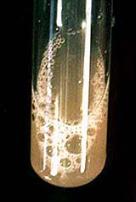
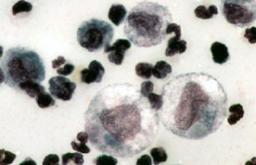
Cytology of
effusion.