FELINE INFECTIOUS PERITONITIS:
Interpretation of a Positive Laboratory Test for Virus Antibody in a Healthy Cat
My cat has tested “positive” for FIP on blood test, but seems healthy. Is it actually
sick?
The early signs of FIP disease can be quite vague and may not be obvious. If your cat
appears to be in good health and has been examined by a veterinarian, then the
“positive” test means only that your cat has been exposed to the virus that can cause
FIP. The laboratory test has detected antibodies to the virus that your cat has
produced. It does not mean that your cat has FIP unless there are other abnormal
laboratory tests or clinical signs present.
Is the virus still present in my cat?
Normally the presence of antibodies means that the virus infection has been cleared,
but with the Feline Coronaviruses, the virus may persist even in the presence of
antibodies. The test does not tell us if virus is still present in your cat. Some advanced
tests are available in specialized laboratories that detect virus.
Will my cat develop FIP disease?
It is impossible to predict which cats will develop FIP. There is a risk but many, if not
most, cats that test “positive” but are otherwise healthy, live out normal lives.
When might FIP disease occur?
Even if FIP were to develop in your cat, it could be months or even years before
clinical signs and symptoms occurred.
What can be done to prevent FIP?
There is a vaccine for FIP but there is no evidence that this would help alter outcome
in a cat that is already “positive’ for antibody. It is probably best not to vaccinate a
“positive” cat. Unfortunately, there is nothing that can be done to affect the outcome. It
depends on complex factors including genetics, the strain of Feline Coronavirus (most
strains are relatively harmless), and so on.
What are the first signs of FIP that I should look out for?
The first signs of FIP may be very vague – listlessness, lethargy, decreased or absent
appetite, and variable fever. After a period of several days or a few weeks other signs
will develop. The most typical sign is an accumulation of fluid in the abdomen giving a
bloated appearance. Similar fluid accumulation in the chest cavity may result in
difficulty in breathing. But in some cats there is little or no fluid accumulation in body
cavities. But there is inflammation within a variety of organs such as liver, intestine
wall, eyes, and brain. This is the so-called “dry” from of FIP.
What should I do?
Make sure that your cat is receiving regular veterinary check-ups. Remember that
infections with Feline Coronaviruses are common (up to 30% of all cats) but FIP
disease is uncommon (less than 1% of cats admitted to veterinary hospitals) therefore
it is quite likely that your cat will not develop FIP disease.
Should I keep my cat away from other cats?
It is not certain that your cat is still carrying virus and therefore it may not be infectious
to other cats. Even if your cat is infectious, the strain of virus it is shedding may be a
strain that is not normally associated with causing FIP. Also, a high proportion of cats
that your cat will come into contact with have already been exposed to strains of
Feline Coronavirus. Therefore you should not be unduly concerned about occasional
contact with other cats. Because kittens and young cats up to about 6 months may be
more susceptible it would be advisable to prevent contact with that age group.
Interpretation of a Positive Laboratory Test for Virus Antibody in a Healthy Cat
My cat has tested “positive” for FIP on blood test, but seems healthy. Is it actually
sick?
The early signs of FIP disease can be quite vague and may not be obvious. If your cat
appears to be in good health and has been examined by a veterinarian, then the
“positive” test means only that your cat has been exposed to the virus that can cause
FIP. The laboratory test has detected antibodies to the virus that your cat has
produced. It does not mean that your cat has FIP unless there are other abnormal
laboratory tests or clinical signs present.
Is the virus still present in my cat?
Normally the presence of antibodies means that the virus infection has been cleared,
but with the Feline Coronaviruses, the virus may persist even in the presence of
antibodies. The test does not tell us if virus is still present in your cat. Some advanced
tests are available in specialized laboratories that detect virus.
Will my cat develop FIP disease?
It is impossible to predict which cats will develop FIP. There is a risk but many, if not
most, cats that test “positive” but are otherwise healthy, live out normal lives.
When might FIP disease occur?
Even if FIP were to develop in your cat, it could be months or even years before
clinical signs and symptoms occurred.
What can be done to prevent FIP?
There is a vaccine for FIP but there is no evidence that this would help alter outcome
in a cat that is already “positive’ for antibody. It is probably best not to vaccinate a
“positive” cat. Unfortunately, there is nothing that can be done to affect the outcome. It
depends on complex factors including genetics, the strain of Feline Coronavirus (most
strains are relatively harmless), and so on.
What are the first signs of FIP that I should look out for?
The first signs of FIP may be very vague – listlessness, lethargy, decreased or absent
appetite, and variable fever. After a period of several days or a few weeks other signs
will develop. The most typical sign is an accumulation of fluid in the abdomen giving a
bloated appearance. Similar fluid accumulation in the chest cavity may result in
difficulty in breathing. But in some cats there is little or no fluid accumulation in body
cavities. But there is inflammation within a variety of organs such as liver, intestine
wall, eyes, and brain. This is the so-called “dry” from of FIP.
What should I do?
Make sure that your cat is receiving regular veterinary check-ups. Remember that
infections with Feline Coronaviruses are common (up to 30% of all cats) but FIP
disease is uncommon (less than 1% of cats admitted to veterinary hospitals) therefore
it is quite likely that your cat will not develop FIP disease.
Should I keep my cat away from other cats?
It is not certain that your cat is still carrying virus and therefore it may not be infectious
to other cats. Even if your cat is infectious, the strain of virus it is shedding may be a
strain that is not normally associated with causing FIP. Also, a high proportion of cats
that your cat will come into contact with have already been exposed to strains of
Feline Coronavirus. Therefore you should not be unduly concerned about occasional
contact with other cats. Because kittens and young cats up to about 6 months may be
more susceptible it would be advisable to prevent contact with that age group.
 |
 |
 |
 |
 |
 |
 |
 |
 |
 |
 |
 |

| Home Meet The Vets Medicine Surgery Boarding Virtual Tour Location What's New List of Services 1001 North W.E.Crawford (Highway 66 in Fate) Rockwall, Texas 75087 972-722-0066 |
(Highway 66 in Fate) Rockwall, Texas 75087 972-722-0066 |
Darren L. Goucher, DVM Dusty B. Goucher, DVM The Staff of the Animal Hospital of Fate |
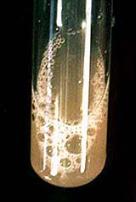
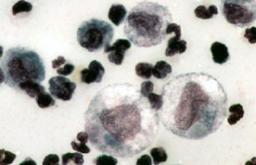
Cytology of
effusion.