FELINE LEUKEMIA VIRUS DISEASE COMPLEX
Until the development of vaccine to protect against Feline Leukemia Virus (FeLV)
infection in the mid-1980’s, the complex of diseases associated with FeLV was the
most frequent cause of death in cats.
What is Feline Leukemia Virus (FeLV)?
Feline leukemia virus (FeLV) is one of the most important infectious viruses of cats. It was
discovered in cats with a form of leukemia, hence its name. FeLV is the cause of a variety of
diseases, not just leukemia. Like all viruses, FeLV is a minute micro-organism consisting of nucleic
acid and a few proteins and glycoproteins in a simple structure. Viruses can only replicate
themselves inside living cells. FeLV is specific to members of the cat family and does not pose a
risk to other animals or people.
How common is FeLV?
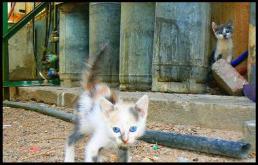
FeLV infection is found worldwide. In general, around 1-2% of the cat population is persistently
infected with this virus, and many more are exposed. The proportion of cats infected differs
according to the geographical location, environment and the life-style of the cat. Infection is more
common in colonies of cats where there is close contact between individuals.
What disease does the virus cause?
FeLV invades and replicates in various cells of the cat’s immune system and blood-forming cells,
and less commonly in other cells. In its replication, the nucleic acid (genetic code) of FeLV inserts
itself into the nucleic acid of the cat cells it has invaded. The result can be death of the cell or change
in its genetic code. Such a change can make the cell potentially cancerous and lead to neoplastic
disease (cancer). The cancerous change may not occur for months or years after infection.
Depending on the type and location of cells infected with FeLV, cancers can occur in a variety of
tissues, organs and body sites. Such cancers can involve any type of the circulating white blood
cells (leukemia) or other cells of the reticulo-endothelial system. The most common tumor
associated with FeLV is that of lymphoid cells known as lymphoma or lymphosarcoma. These
tumors may occur at single or multiple sites in the body.
Although the development of cancer is one outcome of FeLV infection, other diseases more
commonly develop. In many cats, FeLV infection results in a moderate to severe suppression of the
immune system (immunosuppression). This means that the infected cat is less able to defend itself
against a wide range of infections; infections that would not normally cause a problem in healthy
cats. A variety of clinical signs of chronic and/or recurrent disease develops in these cats, and there
is a progressive deterioration in their health over time.
Another common occurrence in FeLV-infected cats is the development of a profound and life-
threatening anemia. Other diseases including abortion, severe enteritis (causing diarrhea),
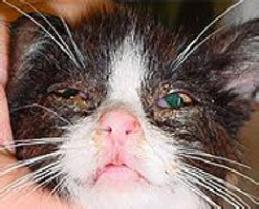
neurological (nervous) signs, and ocular (eye) disease are commonly associated with FeLV
infection.
FeLV is usually fatal. Studies have shown that 80-90% of FeLV-infected cats will die within 3 to 4
years of initial diagnosis.
How is FeLV transmitted?
Direct contact between cats is the most frequent method of FeLV infection. The virus is fragile and
cannot survive longer than a few hours in the environment outside of the cat. A cat with FeLV sheds
a large quantity of the virus in its saliva as well as in other body secretions and excretions such as
urine and feces. However, FeLV is not a highly contagious virus, and transmission generally
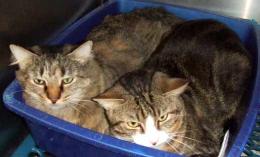
requires a prolonged period of close contact between infected and susceptible cats. Close contact
activities include mating, mutual grooming, and sharing of litter trays and food bowls. Cat bites by an
infected cat can readily transmit infection.
Another potential source of infection is when a pregnant cat infected with FeLV gives birth. In this
situation, all the kittens will likely be born with FeLV virus. Fortunately, it is more likely that a queen
infected with FeLV becomes infertile or there is pre-natal death of the kittens with abortion or
resorption of the fetuses.
What happens when a cat is exposed to FeLV?
Not all cats exposed to FeLV will develop persistent infections. Many of the cats that are infected
are able to mount an immune response to the virus. This immunity is successful in eliminating the
virus in approximately 30% of the cats exposed to FeLV. However, there will have been a period of
some weeks when the virus has been replicating in those cats before they cleared the infection.
During the period when FeLV was replicating inside those cats’ cells, there may have been cell
changes that could lead to disease later in life.
Approximately 70% of cats are unable to mount an immune response to eliminate the virus.
Following infection, these cats become persistently and permanently infected with the virus and are
at the highest risk of developing FeLV-related disease. Furthermore, it is the permanently infected
cats that are primarily responsible for the transmission of FeLV to other cats. It can be many months
or even years between the initial virus infection and the onset of related clinical disease problems.
How can FeLV infection be diagnosed?
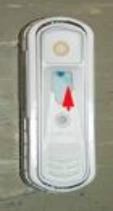
Diagnosis of FeLV infection is relatively simple. A rapid blood test can be performed which is able
to detect viral proteins of FeLV in the blood of an infected cat. This test is very accurate and reliable;
although false results occur on occasion. In some situations it may be necessary to confirm infection
through further blood testing at a specialist laboratory where more sophisticated tests are available.
Additionally, some cats with only a transient FeLV infection will be positive on the blood test and a
second test performed 8-12 weeks after the first test may be required to confirm persistent infection.
Diagnosis of FeLV disease is more difficult because of the variety of signs and symptoms and the
frequent complication of other disease problems co-existing with, and promoted by, the FeLV
infection.
Is there any treatment for FeLV infection or disease?
There is currently no specific treatment for FeLV-infected cats (no treatment to eliminate the virus
from the body). Most FeLV-infected cats will eventually die of diseases related to their infection or
require euthanasia. However, many cats showing FeLV-related disease will improve on
symptomatic treatment, at least for a period of time. For example, if FeLV is causing disease in an
individual through immunosuppression and the development of secondary infections, these other
concurrent diseases may be treatable, leading to improvement of the clinical signs.
How can infection be prevented?
Vaccines are now available to protect cats against FeLV infection. Their use is highly
recommended in any cat that goes outside at any time and therefore could have contact with FeLV-
infected cats. As with other vaccines, an initial course of two injections is required, and annual
boosters are necessary to maintain best immunity. Your veterinarian will discuss the most
appropriate options for your cat with you. We recommend testing all cats for FeLV prior to
vaccination.
Although vaccination is very helpful in preventing infection with FeLV and thus controlling FeLV-
related disease, no vaccine is 100% protective. Where possible do not allow your cat, particularly if
a kitten, to come into close contact with known FeLV-infected cats or cats without a known history of
proper vaccinations.
In larger colonies of cats, such as breeding households, it is possible to control FeLV infection by
regular blood testing. A combination of routine FeLV testing, quarantine and vaccination strategies
can help prevent a FeLV outbreak in these situations. Fortunately, vaccinating a cat does not
interfere with subsequent blood testing for FeLV (except possibly in the week immediately following
vaccination).
Until the development of vaccine to protect against Feline Leukemia Virus (FeLV)
infection in the mid-1980’s, the complex of diseases associated with FeLV was the
most frequent cause of death in cats.
What is Feline Leukemia Virus (FeLV)?
Feline leukemia virus (FeLV) is one of the most important infectious viruses of cats. It was
discovered in cats with a form of leukemia, hence its name. FeLV is the cause of a variety of
diseases, not just leukemia. Like all viruses, FeLV is a minute micro-organism consisting of nucleic
acid and a few proteins and glycoproteins in a simple structure. Viruses can only replicate
themselves inside living cells. FeLV is specific to members of the cat family and does not pose a
risk to other animals or people.
How common is FeLV?
FeLV infection is found worldwide. In general, around 1-2% of the cat population is persistently
infected with this virus, and many more are exposed. The proportion of cats infected differs
according to the geographical location, environment and the life-style of the cat. Infection is more
common in colonies of cats where there is close contact between individuals.
What disease does the virus cause?
FeLV invades and replicates in various cells of the cat’s immune system and blood-forming cells,
and less commonly in other cells. In its replication, the nucleic acid (genetic code) of FeLV inserts
itself into the nucleic acid of the cat cells it has invaded. The result can be death of the cell or change
in its genetic code. Such a change can make the cell potentially cancerous and lead to neoplastic
disease (cancer). The cancerous change may not occur for months or years after infection.
Depending on the type and location of cells infected with FeLV, cancers can occur in a variety of
tissues, organs and body sites. Such cancers can involve any type of the circulating white blood
cells (leukemia) or other cells of the reticulo-endothelial system. The most common tumor
associated with FeLV is that of lymphoid cells known as lymphoma or lymphosarcoma. These
tumors may occur at single or multiple sites in the body.
Although the development of cancer is one outcome of FeLV infection, other diseases more
commonly develop. In many cats, FeLV infection results in a moderate to severe suppression of the
immune system (immunosuppression). This means that the infected cat is less able to defend itself
against a wide range of infections; infections that would not normally cause a problem in healthy
cats. A variety of clinical signs of chronic and/or recurrent disease develops in these cats, and there
is a progressive deterioration in their health over time.
Another common occurrence in FeLV-infected cats is the development of a profound and life-
threatening anemia. Other diseases including abortion, severe enteritis (causing diarrhea),
neurological (nervous) signs, and ocular (eye) disease are commonly associated with FeLV
infection.
FeLV is usually fatal. Studies have shown that 80-90% of FeLV-infected cats will die within 3 to 4
years of initial diagnosis.
How is FeLV transmitted?
Direct contact between cats is the most frequent method of FeLV infection. The virus is fragile and
cannot survive longer than a few hours in the environment outside of the cat. A cat with FeLV sheds
a large quantity of the virus in its saliva as well as in other body secretions and excretions such as
urine and feces. However, FeLV is not a highly contagious virus, and transmission generally
requires a prolonged period of close contact between infected and susceptible cats. Close contact
activities include mating, mutual grooming, and sharing of litter trays and food bowls. Cat bites by an
infected cat can readily transmit infection.
Another potential source of infection is when a pregnant cat infected with FeLV gives birth. In this
situation, all the kittens will likely be born with FeLV virus. Fortunately, it is more likely that a queen
infected with FeLV becomes infertile or there is pre-natal death of the kittens with abortion or
resorption of the fetuses.
What happens when a cat is exposed to FeLV?
Not all cats exposed to FeLV will develop persistent infections. Many of the cats that are infected
are able to mount an immune response to the virus. This immunity is successful in eliminating the
virus in approximately 30% of the cats exposed to FeLV. However, there will have been a period of
some weeks when the virus has been replicating in those cats before they cleared the infection.
During the period when FeLV was replicating inside those cats’ cells, there may have been cell
changes that could lead to disease later in life.
Approximately 70% of cats are unable to mount an immune response to eliminate the virus.
Following infection, these cats become persistently and permanently infected with the virus and are
at the highest risk of developing FeLV-related disease. Furthermore, it is the permanently infected
cats that are primarily responsible for the transmission of FeLV to other cats. It can be many months
or even years between the initial virus infection and the onset of related clinical disease problems.
How can FeLV infection be diagnosed?
Diagnosis of FeLV infection is relatively simple. A rapid blood test can be performed which is able
to detect viral proteins of FeLV in the blood of an infected cat. This test is very accurate and reliable;
although false results occur on occasion. In some situations it may be necessary to confirm infection
through further blood testing at a specialist laboratory where more sophisticated tests are available.
Additionally, some cats with only a transient FeLV infection will be positive on the blood test and a
second test performed 8-12 weeks after the first test may be required to confirm persistent infection.
Diagnosis of FeLV disease is more difficult because of the variety of signs and symptoms and the
frequent complication of other disease problems co-existing with, and promoted by, the FeLV
infection.
Is there any treatment for FeLV infection or disease?
There is currently no specific treatment for FeLV-infected cats (no treatment to eliminate the virus
from the body). Most FeLV-infected cats will eventually die of diseases related to their infection or
require euthanasia. However, many cats showing FeLV-related disease will improve on
symptomatic treatment, at least for a period of time. For example, if FeLV is causing disease in an
individual through immunosuppression and the development of secondary infections, these other
concurrent diseases may be treatable, leading to improvement of the clinical signs.
How can infection be prevented?
Vaccines are now available to protect cats against FeLV infection. Their use is highly
recommended in any cat that goes outside at any time and therefore could have contact with FeLV-
infected cats. As with other vaccines, an initial course of two injections is required, and annual
boosters are necessary to maintain best immunity. Your veterinarian will discuss the most
appropriate options for your cat with you. We recommend testing all cats for FeLV prior to
vaccination.
Although vaccination is very helpful in preventing infection with FeLV and thus controlling FeLV-
related disease, no vaccine is 100% protective. Where possible do not allow your cat, particularly if
a kitten, to come into close contact with known FeLV-infected cats or cats without a known history of
proper vaccinations.
In larger colonies of cats, such as breeding households, it is possible to control FeLV infection by
regular blood testing. A combination of routine FeLV testing, quarantine and vaccination strategies
can help prevent a FeLV outbreak in these situations. Fortunately, vaccinating a cat does not
interfere with subsequent blood testing for FeLV (except possibly in the week immediately following
vaccination).
 |
 |
 |
 |
 |
 |
 |
 |
 |
 |
 |
 |

Animal Hospital of Fate 1001 North W.E.Crawford (Highway 66 in Fate) Rockwall, Texas 75087 972-722-0066 |
| 1001 North W.E.Crawford (Highway 66 in Fate) Rockwall, Texas 75087 |
| Dusty B. Goucher, DVM The Staff of the Animal Hospital of Fate |