FLEA CONTROL
Where does my cat get fleas?
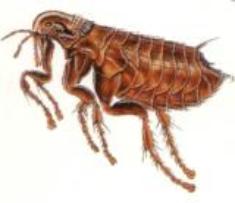
The most common flea found on cats and dogs is the cat flea (Ctenocephalides felis). Rarely rabbit
fleas or hedgehog fleas are found on cats.
The most important source of cat fleas is newly emerged adult fleas from pupae in your house.
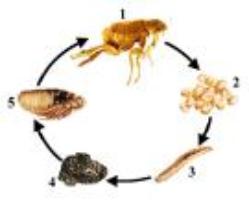
Adult fleas live and feed on our pets but the female flea lays eggs, which fall off into the environment.
Under favorable conditions, these eggs develop first into larvae and then into pupae. The pupae
contain adult fleas that lie in wait for a suitable animal host. Modern carpeted centrally-heated
homes provide ideal conditions for the year round development of fleas. The highest numbers of
flea eggs, larvae and pupae will be found in areas of the house where pets spend the most time
such as their beds, furniture and so forth. Even though fleas may be in your house, you probably
won't see them; the eggs are too small to see without magnification and the larvae, which are just
visible, migrate deep down into carpets, furniture or cracks in floors away from the light.
What effect do fleas have on my cat?
Many cats live with fleas but show minimal signs. The following problems can occur:
• Some cats develop an allergy to flea bites. If these cats are bitten by fleas they groom or
scratch excessively and develop skin disease.
• Adult fleas live on animals and feed on blood. In kittens and debilitated animals this may
cause anemia.
• The flea acts as the intermediate host for the tapeworm (Dipylidium caninum). Tapeworm
eggs, which are shed within tapeworm segments in cat feces, are eaten by flea larvae that develop
into infected fleas. Cats become infested by eating infected fleas during grooming. Any cat with
fleas is likely also to have a tapeworm infestation.
How can I get rid of fleas on my cat?
This can be a demanding task and requires a three pronged approach. Fleas need to be
eliminated from your cat, from any other cats and dogs that you have and from your home. Even this
rigorous approach may not give 100% control as there are other sources of fleas that are not
amenable to your control such as other people's pets, wild animals and infested environments
which your cat may come into contact with outside your house.
What products are available to treat my cat?
Insecticides applied to cats are designed to kill adult fleas. Many products have limited
effectiveness because they only work for a few hours after application. This is particularly true of flea
shampoos and powders; they kill fleas present on your cat at the time of application but have little
residual effect so the day after use the cat may again have fleas. There are now some newer
products available from your veterinarian which have excellent residual action.
ALWAYS READ THE LABEL CAREFULLY - apply the product as instructed and
repeat at the intervals stated.
My cat hates being sprayed. What can I do?
Many cats strongly dislike being sprayed. Consult your veterinarian, as there are several
alternatives available. Flea collars are very convenient but they don't work well or provide sufficient
control for a flea allergic cat. Additionally, some flea collars may be harmful to some cats. Some
cats will develop a skin reaction to collars. There are flea foams available that you brush into your
cat's coat. There is a new pump spray containing liquid that can be measured out and then stroked
onto your cat's coat. There are several topical insecticides that are formulated as "spot-ons"; these
contain a small volume of liquid that is applied onto the cat's skin on the back of its neck.
How can I treat my home environment?
A number of different products are available which will kill the stages of the flea life cycle present in
your home such as:
• Insecticide sprays for use in the house
• Sprays containing insect growth regulators for use in the house
• A liquid (for cats) or a tablet (for dogs) which is given to the pet by mouth and which contains a
chitin synthesis inhibitor. Adult fleas which feed on the medicated animal produce eggs which are
incapable of hatching to produce adult fleas so the development of an infested environment is
prevented. This is a form of “birth control” for fleas. All pets in the household need to be treated.
• Insecticides applied by professional pest control operatives in your house.
Sprays for use in the house should be used in places where the flea eggs, larvae and pupae are
likely to be. It is recommended that you treat the entire household first and then concentrate on the
hot spots - your cat's favorite dozing spots - such as soft furniture, beds and carpets. Once they
hatch from the egg, flea larvae move away from the light and burrow deep into carpets and into
other nooks and crannies where it is difficult to treat. Be sure to move cushions, furniture and beds
to spray underneath. Other places larvae are likely to live include baseboards and the cracks in
wooden floors.
Your pet's bedding should be regularly washed in hot water or replaced. Regular and thorough
vacuuming of your carpets, floors and soft furnishings can remove a large number of flea eggs,
larvae and pupae that are present in your home. You will need to throw away the vacuum bag to
prevent eggs and larvae from developing inside the vacuum cleaner. Vacuuming prior to the
application of a spray to the house is recommended because the vibrations will encourage newly
developed fleas to emerge from pupae, which will be killed by the insecticide.
How do I choose which products to use?
A flea control program needs to be individually tailored based on the lifestyle of your cat and other
pets. Your veterinarian is the best person to advise you about safe and effective flea control
products.
Are insecticides safe for my cat and my family?
Insecticides for flea control should be safe both for pets and humans provided the manufacturer's
instructions are carefully followed. One should be particularly careful to avoid combining
insecticides with similar modes of action. Always seek your veterinarian's advice if you are unsure
about this and always tell your veterinarian about any flea control products you may be using other
than those which he has prescribed.
Certain types of pets (e.g. fish, amphibians, reptiles and invertebrates) may be particularly
susceptible to some products. Do not use any flea control products in the room in which these pets
are kept without first consulting your veterinarian for advice.
I have not seen any fleas on my cat. Why has my veterinarian advised flea control?
Fleas are easy to find if a cat is heavily infested. If fleas are present in smaller numbers, it can be
harder to see them and fleas move fast! Try looking on the cat's stomach, around the tail base and
around the neck. Sometimes adult fleas cannot be found but "flea dirt" can be seen. This is fecal
matter from the flea that contains partially digested blood and is a good indicator of the presence of
fleas. Flea dirt is seen as small black specks or coiled structures; when placed on damp white
tissue, they dissolve leaving a reddish brown blood color. Flea dirt may be found in cat's bedding
even when they cannot be found on the cat.
In cats that develop an allergy to fleas one of the symptoms is excessive grooming. Cats are very
efficient at removing debris from their coat's using their tongues and may succeed in removing all
evidence of flea infestation i.e. adult fleas and flea dirt. One of the commonest causes of feline
allergic skin disease is flea allergy. To investigate this possibility your veterinarian may advise
rigorous flea control even though no fleas can be found. If the cat's skin problem improves with flea
control then it suggests that flea allergy is involved.
I noticed my cat had fleas after his return from boarding. Did he get fleas there?
Not necessarily. Newly hatched adult fleas can survive for up to 140 days within the pupa. When you
and your pets are absent from home for extended periods of time these adult fleas remain in the
pupae because no host is available. As soon as you or your pet returns home, these fleas will
emerge in large numbers and jump onto cats, dogs and even people in the search for a blood meal.
Despite treating my cat for fleas he still has them. Is there a “super flea”?
There is no evidence of fleas developing resistant to insecticides. Apparent failure of treatment
almost always results from inadequate treatment of the home or exposure to other infested pets or
environments. Consider treating sheds, cars and any outdoor sleeping spots. Bear in mind that your
cat may be going into other people's houses. Most of these problems can be overcome by using an
effective product on the cat to kill adult fleas in addition to treating your home.
Where does my cat get fleas?
The most common flea found on cats and dogs is the cat flea (Ctenocephalides felis). Rarely rabbit
fleas or hedgehog fleas are found on cats.
The most important source of cat fleas is newly emerged adult fleas from pupae in your house.
Adult fleas live and feed on our pets but the female flea lays eggs, which fall off into the environment.
Under favorable conditions, these eggs develop first into larvae and then into pupae. The pupae
contain adult fleas that lie in wait for a suitable animal host. Modern carpeted centrally-heated
homes provide ideal conditions for the year round development of fleas. The highest numbers of
flea eggs, larvae and pupae will be found in areas of the house where pets spend the most time
such as their beds, furniture and so forth. Even though fleas may be in your house, you probably
won't see them; the eggs are too small to see without magnification and the larvae, which are just
visible, migrate deep down into carpets, furniture or cracks in floors away from the light.
What effect do fleas have on my cat?
Many cats live with fleas but show minimal signs. The following problems can occur:
• Some cats develop an allergy to flea bites. If these cats are bitten by fleas they groom or
scratch excessively and develop skin disease.
• Adult fleas live on animals and feed on blood. In kittens and debilitated animals this may
cause anemia.
• The flea acts as the intermediate host for the tapeworm (Dipylidium caninum). Tapeworm
eggs, which are shed within tapeworm segments in cat feces, are eaten by flea larvae that develop
into infected fleas. Cats become infested by eating infected fleas during grooming. Any cat with
fleas is likely also to have a tapeworm infestation.
How can I get rid of fleas on my cat?
This can be a demanding task and requires a three pronged approach. Fleas need to be
eliminated from your cat, from any other cats and dogs that you have and from your home. Even this
rigorous approach may not give 100% control as there are other sources of fleas that are not
amenable to your control such as other people's pets, wild animals and infested environments
which your cat may come into contact with outside your house.
What products are available to treat my cat?
Insecticides applied to cats are designed to kill adult fleas. Many products have limited
effectiveness because they only work for a few hours after application. This is particularly true of flea
shampoos and powders; they kill fleas present on your cat at the time of application but have little
residual effect so the day after use the cat may again have fleas. There are now some newer
products available from your veterinarian which have excellent residual action.
ALWAYS READ THE LABEL CAREFULLY - apply the product as instructed and
repeat at the intervals stated.
My cat hates being sprayed. What can I do?
Many cats strongly dislike being sprayed. Consult your veterinarian, as there are several
alternatives available. Flea collars are very convenient but they don't work well or provide sufficient
control for a flea allergic cat. Additionally, some flea collars may be harmful to some cats. Some
cats will develop a skin reaction to collars. There are flea foams available that you brush into your
cat's coat. There is a new pump spray containing liquid that can be measured out and then stroked
onto your cat's coat. There are several topical insecticides that are formulated as "spot-ons"; these
contain a small volume of liquid that is applied onto the cat's skin on the back of its neck.
How can I treat my home environment?
A number of different products are available which will kill the stages of the flea life cycle present in
your home such as:
• Insecticide sprays for use in the house
• Sprays containing insect growth regulators for use in the house
• A liquid (for cats) or a tablet (for dogs) which is given to the pet by mouth and which contains a
chitin synthesis inhibitor. Adult fleas which feed on the medicated animal produce eggs which are
incapable of hatching to produce adult fleas so the development of an infested environment is
prevented. This is a form of “birth control” for fleas. All pets in the household need to be treated.
• Insecticides applied by professional pest control operatives in your house.
Sprays for use in the house should be used in places where the flea eggs, larvae and pupae are
likely to be. It is recommended that you treat the entire household first and then concentrate on the
hot spots - your cat's favorite dozing spots - such as soft furniture, beds and carpets. Once they
hatch from the egg, flea larvae move away from the light and burrow deep into carpets and into
other nooks and crannies where it is difficult to treat. Be sure to move cushions, furniture and beds
to spray underneath. Other places larvae are likely to live include baseboards and the cracks in
wooden floors.
Your pet's bedding should be regularly washed in hot water or replaced. Regular and thorough
vacuuming of your carpets, floors and soft furnishings can remove a large number of flea eggs,
larvae and pupae that are present in your home. You will need to throw away the vacuum bag to
prevent eggs and larvae from developing inside the vacuum cleaner. Vacuuming prior to the
application of a spray to the house is recommended because the vibrations will encourage newly
developed fleas to emerge from pupae, which will be killed by the insecticide.
How do I choose which products to use?
A flea control program needs to be individually tailored based on the lifestyle of your cat and other
pets. Your veterinarian is the best person to advise you about safe and effective flea control
products.
Are insecticides safe for my cat and my family?
Insecticides for flea control should be safe both for pets and humans provided the manufacturer's
instructions are carefully followed. One should be particularly careful to avoid combining
insecticides with similar modes of action. Always seek your veterinarian's advice if you are unsure
about this and always tell your veterinarian about any flea control products you may be using other
than those which he has prescribed.
Certain types of pets (e.g. fish, amphibians, reptiles and invertebrates) may be particularly
susceptible to some products. Do not use any flea control products in the room in which these pets
are kept without first consulting your veterinarian for advice.
I have not seen any fleas on my cat. Why has my veterinarian advised flea control?
Fleas are easy to find if a cat is heavily infested. If fleas are present in smaller numbers, it can be
harder to see them and fleas move fast! Try looking on the cat's stomach, around the tail base and
around the neck. Sometimes adult fleas cannot be found but "flea dirt" can be seen. This is fecal
matter from the flea that contains partially digested blood and is a good indicator of the presence of
fleas. Flea dirt is seen as small black specks or coiled structures; when placed on damp white
tissue, they dissolve leaving a reddish brown blood color. Flea dirt may be found in cat's bedding
even when they cannot be found on the cat.
In cats that develop an allergy to fleas one of the symptoms is excessive grooming. Cats are very
efficient at removing debris from their coat's using their tongues and may succeed in removing all
evidence of flea infestation i.e. adult fleas and flea dirt. One of the commonest causes of feline
allergic skin disease is flea allergy. To investigate this possibility your veterinarian may advise
rigorous flea control even though no fleas can be found. If the cat's skin problem improves with flea
control then it suggests that flea allergy is involved.
I noticed my cat had fleas after his return from boarding. Did he get fleas there?
Not necessarily. Newly hatched adult fleas can survive for up to 140 days within the pupa. When you
and your pets are absent from home for extended periods of time these adult fleas remain in the
pupae because no host is available. As soon as you or your pet returns home, these fleas will
emerge in large numbers and jump onto cats, dogs and even people in the search for a blood meal.
Despite treating my cat for fleas he still has them. Is there a “super flea”?
There is no evidence of fleas developing resistant to insecticides. Apparent failure of treatment
almost always results from inadequate treatment of the home or exposure to other infested pets or
environments. Consider treating sheds, cars and any outdoor sleeping spots. Bear in mind that your
cat may be going into other people's houses. Most of these problems can be overcome by using an
effective product on the cat to kill adult fleas in addition to treating your home.
 |
 |
 |
 |
 |
 |
 |
 |
 |
 |
 |
 |

Animal Hospital of Fate Rockwall, Texas 75087 972-722-0066 |
1001 North W.E.Crawford (Highway 66 in Fate) Rockwall, Texas 75087 972-722-0066 |
Darren L. Goucher, DVM The Staff of the Animal Hospital of Fate |