HEMOBARTONELLOSIS
(FELINE INFECTIOUS ANEMIA)
What is feline Infectious Anemia?
Feline Infectious Anemia (FIA) is a relatively uncommon infection of cat red blood cells by a
microscopic parasite. The destruction of the infected red blood cells results in anemia. Anemia is a
medical term referring to a reduction in the numbers of red blood cells (erythrocytes) or in the
quantity of the blood pigment, and oxygen-carrying protein, called hemoglobin, in the blood.
What causes feline infectious anemia (FIA)?
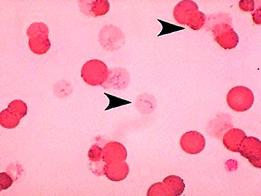
FIA is caused by a tiny, microscopic parasite that attaches itself to the surface of the cat's red
blood. The parasite is called Hemobartonella felis and is a member of the Protozoa. The infected
blood cells may die directly or be treated as “foreign” by the cat’s immune system and destroyed. If
enough cells are infected and destroyed the result is anemia.
What are the signs of FIA?
The anemia may be mild, at least early in the infection, and not cause any obvious signs. Many
cases of Hemobartonella infection in cats go undetected. Some of these subclinical cases remain
long-term carriers of the disease. Later in life, some other infection such as feline leukemia may
lower the cat’s immunity and then FIA may occur.
When enough red cells are destroyed, symptomatic anemia occurs. The mucous membranes,
readily observed in the conjunctiva of the eyes, or the gums, will be pale to white (or even yellowish if
there is some jaundice present). Because the oxygen carrying capacity of the blood is decreased
the cat may tire quickly, be generally weak and depressed, and may begin losing weight.
How is FIA diagnosed?
There are many reasons for a cat to be anemic, and even if Hemobartonella is detected it may not
be the sole cause. A full clinical examination with diagnostic blood tests will be needed. The
organism is detected microscopically by its characteristic form on the surface of stained red blood
cells. It is a very small organism and can be difficult to observe especially when relatively few red
cells are infected. The proportion of infected cells can fluctuate from day to day. Because the
organism can sometimes be found in normal cats, the mere detection of Hemobartonella does not
confirm a diagnosis of FIA and other possible causes of the anemia should not be overlooked.
Can FIA be treated?
Hemobartonella is destroyed by some of the broad-spectrum antibiotics such as tetracyclines. In
some cases, after an initial good response there may be relapse and the organism can persist in
sites protected from the antibiotic. It is important not to end the course of antibiotics before
completed. If another disease is present, this must also be addressed. If an immune-mediated
disease is suspected, immune-suppressive drugs such as corticosteroids may be used. If the
anemia is very severe, a blood transfusion may be required.
How could my cat get FIA and are my other cats at risk?
The major means of transmission is thought to be biting, blood-sucking parasites such as fleas.
Direct cat to cat transmission or by contaminated food bowls and litter-trays seems unlikely. Even if
there are other cats in the household they may remain uninfected, or at least symptom free.
However, the bite from an infected cat may spread the infection. The incubation period may be as
long as 7 weeks (two weeks is more usual) so the source of the infection may be difficult to
determine. The way it is spread between cats is not fully understood.
(FELINE INFECTIOUS ANEMIA)
What is feline Infectious Anemia?
Feline Infectious Anemia (FIA) is a relatively uncommon infection of cat red blood cells by a
microscopic parasite. The destruction of the infected red blood cells results in anemia. Anemia is a
medical term referring to a reduction in the numbers of red blood cells (erythrocytes) or in the
quantity of the blood pigment, and oxygen-carrying protein, called hemoglobin, in the blood.
What causes feline infectious anemia (FIA)?
FIA is caused by a tiny, microscopic parasite that attaches itself to the surface of the cat's red
blood. The parasite is called Hemobartonella felis and is a member of the Protozoa. The infected
blood cells may die directly or be treated as “foreign” by the cat’s immune system and destroyed. If
enough cells are infected and destroyed the result is anemia.
What are the signs of FIA?
The anemia may be mild, at least early in the infection, and not cause any obvious signs. Many
cases of Hemobartonella infection in cats go undetected. Some of these subclinical cases remain
long-term carriers of the disease. Later in life, some other infection such as feline leukemia may
lower the cat’s immunity and then FIA may occur.
When enough red cells are destroyed, symptomatic anemia occurs. The mucous membranes,
readily observed in the conjunctiva of the eyes, or the gums, will be pale to white (or even yellowish if
there is some jaundice present). Because the oxygen carrying capacity of the blood is decreased
the cat may tire quickly, be generally weak and depressed, and may begin losing weight.
How is FIA diagnosed?
There are many reasons for a cat to be anemic, and even if Hemobartonella is detected it may not
be the sole cause. A full clinical examination with diagnostic blood tests will be needed. The
organism is detected microscopically by its characteristic form on the surface of stained red blood
cells. It is a very small organism and can be difficult to observe especially when relatively few red
cells are infected. The proportion of infected cells can fluctuate from day to day. Because the
organism can sometimes be found in normal cats, the mere detection of Hemobartonella does not
confirm a diagnosis of FIA and other possible causes of the anemia should not be overlooked.
Can FIA be treated?
Hemobartonella is destroyed by some of the broad-spectrum antibiotics such as tetracyclines. In
some cases, after an initial good response there may be relapse and the organism can persist in
sites protected from the antibiotic. It is important not to end the course of antibiotics before
completed. If another disease is present, this must also be addressed. If an immune-mediated
disease is suspected, immune-suppressive drugs such as corticosteroids may be used. If the
anemia is very severe, a blood transfusion may be required.
How could my cat get FIA and are my other cats at risk?
The major means of transmission is thought to be biting, blood-sucking parasites such as fleas.
Direct cat to cat transmission or by contaminated food bowls and litter-trays seems unlikely. Even if
there are other cats in the household they may remain uninfected, or at least symptom free.
However, the bite from an infected cat may spread the infection. The incubation period may be as
long as 7 weeks (two weeks is more usual) so the source of the infection may be difficult to
determine. The way it is spread between cats is not fully understood.
 |
 |
 |
 |
 |
 |
 |
 |
 |
 |
 |
 |

Animal Hospital of Fate 1001 North W.E.Crawford (Highway 66 in Fate) Rockwall, Texas 75087 972-722-0066 |
| 1001 North W.E.Crawford (Highway 66 in Fate) Rockwall, Texas 75087 972-722-0066 |
| Darren L. Goucher, DVM Dusty B. Goucher, DVM The Staff of the Animal Hospital of Fate |